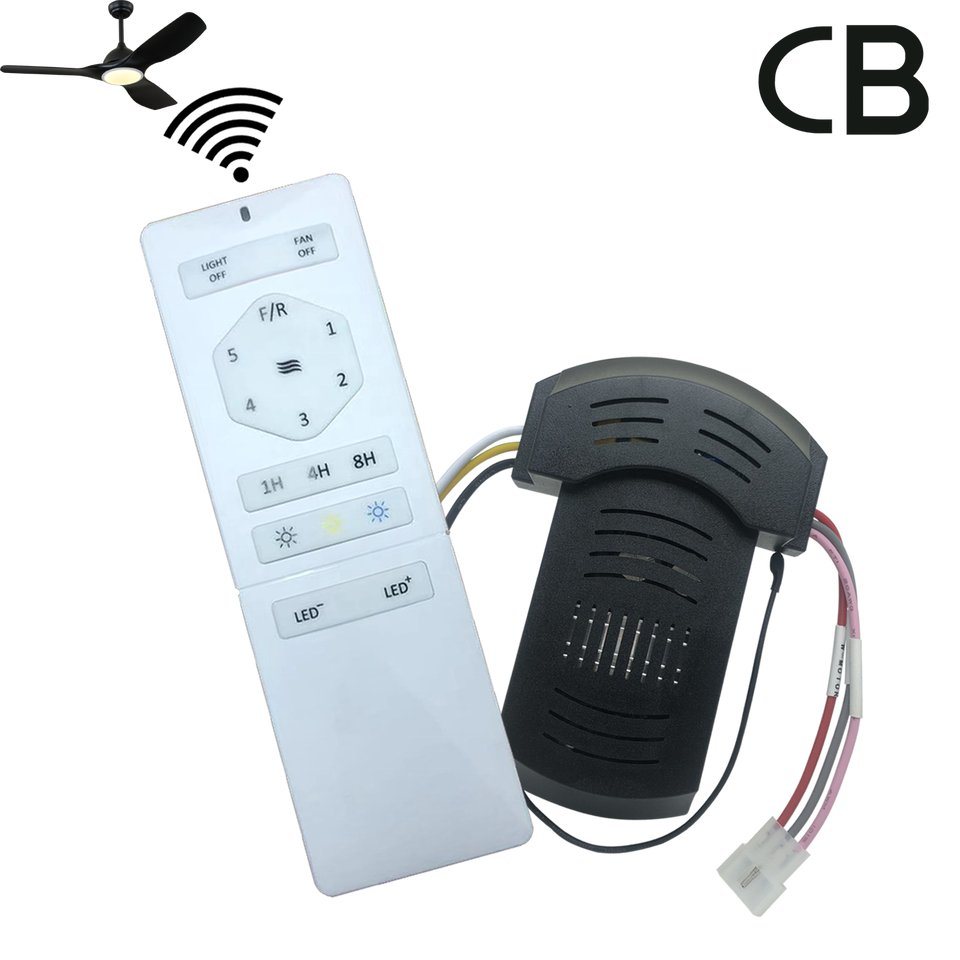
For decades, the ceiling fan was a simple electro-mechanical device: pull a chain, choose a speed, and accept the noise and energy bill. That picture is changing fast. Today, consumers expect their fans to connect to smartphones, respond to voice commands, and integrate with home automation platforms. For fan manufacturers and brand owners, the path to that future runs through the smart BLDC fan controller.
A modern IoT ceiling fan controller does more than vary motor speed. It hosts a Wi-Fi or Bluetooth radio, speaks cloud protocols, and exposes an API that mobile apps and smart speakers can use. The good news for established fan factories is that the upgrade is usually a DC fan control board swap, not a complete fan redesign.
What Makes a BLDC Fan Controller "Smart"?
At its core, a BLDC ceiling fan still needs the same things it always did: efficient commutation, smooth speed control, thermal protection, and low EMI. A smart controller adds a connectivity layer on top of that foundation without sacrificing motor performance.
The key components of an IoT-ready controller include:
Dual-core or Wi-Fi-enabled MCU — runs the motor control loop and the network stack on one chip or a paired module
Secure cloud onboarding — typically through a vendor app that handles Wi-Fi provisioning and token exchange
Protocol bridge — translates app commands into motor speed, direction, timer, and light settings
Over-the-air (OTA) update support — lets brands patch firmware and add features after the fan is installed
Voice-assistant compatibility — Amazon Alexa, Google Assistant, and Apple HomeKit integrations
Why OEM Brands Are Adding Wi-Fi to Ceiling Fans
The business case for a WiFi fan controller goes beyond the feature checklist. Connected fans command higher retail prices, reduce product returns through remote diagnostics, and create ongoing customer touchpoints via the app.
1. Premium Positioning
A basic BLDC fan and a smart BLDC fan can share the same motor and blades. The difference is the controller and the app experience. That makes connectivity one of the highest-margin upgrades a brand can offer.
2. Energy Insights and Scheduling
Smart controllers can report runtime and power consumption, letting users schedule operation around time-of-use electricity rates. This reinforces the efficiency story that already drives BLDC ceiling fan adoption.
3. Differentiation in a Crowded Market
In markets like India, Southeast Asia, and Latin America where ceiling fan competition is intense, app and voice control help a brand stand out on the retail shelf and in e-commerce listings.
4. Reduced Warranty Costs
Remote diagnostics and OTA updates let brands identify field issues early and fix them without service calls. A well-designed smart BLDC fan controller can log fault events and report them to the cloud.
Design Considerations for an IoT Ceiling Fan Controller
Adding radio and cloud connectivity to a motor controller introduces new engineering constraints. Fan factories evaluating a DC fan control board for smart products should look closely at the following areas.
RF Performance in a Motor Environment
Brushless motors generate electrical noise that can interfere with Wi-Fi and Bluetooth signals. The PCBA layout must keep RF traces away from switching nodes, and the antenna placement must account for the metal motor housing.
Power Supply and Standby Consumption
A connected controller needs to keep the radio alive even when the fan appears off. The standby power supply must be efficient and well isolated to avoid phantom load and heat buildup.
Security by Design
Connected devices are attack surfaces. The controller should support encrypted storage, secure boot, certificate-based authentication, and regular OTA patches. Cheap connected controllers often skip these, creating long-term liability for the brand.
Certification Roadmap
Adding a radio brings FCC/CE/IC/SRRC radio approvals on top of the existing safety and EMC requirements for the fan. A controller supplier with pre-certified modules can shorten time-to-market significantly.
SankeyTech's Approach to Smart DC Fan Control
SankeyTech designs DC fan control boards that bridge high-efficiency motor control and modern connectivity. Our controller platforms are built around proven BLDC drive topologies and are available with optional Wi-Fi / Bluetooth modules for IoT applications.
What fan brands get from SankeyTech's smart controller solutions:
MCU-based BLDC motor control with smooth start, low noise, and wide speed range
Optional Wi-Fi and RF 2.4G remote integration on a single PCBA
App-compatible command interface and OTA update architecture
Support for wall switch, remote, and mobile app inputs simultaneously
Pre-tested EMC and safety margins to streamline certification
Integration Checklist for Fan Manufacturers
If you are a fan factory planning to launch a smart BLDC ceiling fan, use this checklist when selecting a controller partner:
Does the controller support both local remote control and cloud app control?
Is the RF module pre-certified for your target markets?
Can the firmware be updated over the air?
Does the PCBA include protection against voltage surges, overtemperature, and locked-rotor conditions?
Is the supplier able to customize the app interface and cloud dashboard?
Conclusion: Connectivity Is the Next Upgrade Cycle
The shift from AC to BLDC was the last major transformation in ceiling fans. The next one is connectivity. A smart BLDC fan controller lets fan brands turn a commodity appliance into a platform, complete with app control, scheduling, energy feedback, and voice integration.
For manufacturers that already build BLDC ceiling fans, the upgrade is primarily a controller decision. Choosing an IoT ceiling fan controller from a supplier that understands both motor control and RF certification can cut months from the development schedule and reduce field risk.
Contact SankeyTech to discuss Wi-Fi-enabled DC fan control boards for your next smart ceiling fan project. We provide reference designs, PCBA customization, and technical support to help fan brands launch connected products faster.