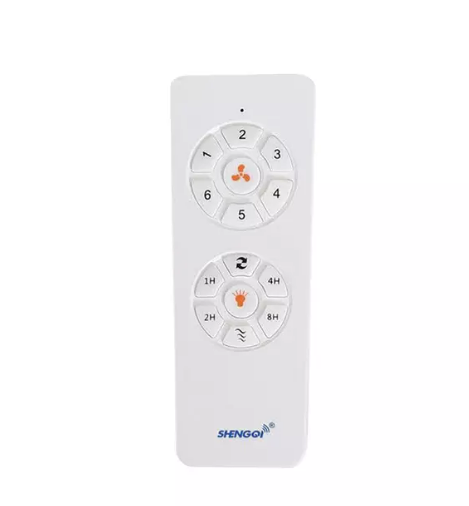
Introduction
Ceiling fan remotes come in different technologies, but which one is right for you? Infrared (IR) or Radio Frequency (RF), both serve the same purpose but operate differently. In this article, we will explore the key differences between IR and RF ceiling fan remotes. You’ll learn how each works, their pros and cons, and which one is best suited for your home.
Understanding IR (Infrared) Remotes for Ceiling Fans
How IR Remotes Work
Infrared (IR) technology is a common form of communication for remote controls. Much like your TV remote, IR remotes send signals through invisible infrared light. However, one key feature of IR remotes is that they require a direct line-of-sight between the remote and the receiver on the fan. If something obstructs the signal, such as a piece of furniture or a person standing in front of the fan, the signal may not work effectively.
This limitation makes IR remotes ideal for smaller spaces or rooms with few obstructions where the remote can easily reach the fan’s sensor.
Advantages and Limitations of IR Remotes
IR remotes are known for being simple, reliable, and inexpensive. They don’t require much power, making them energy-efficient, and they’re typically more affordable than their RF counterparts. However, the range of IR remotes is often limited to about 10 to 15 feet, which can be restrictive in larger spaces.
Another limitation of IR technology is its susceptibility to interference from light sources like the sun or LED lights. These signals can sometimes cause delays or disrupt communication between the remote and the fan.
Ideal Use Cases for IR Remotes
IR remotes are most effective in smaller rooms or spaces where the fan is always within line-of-sight. They are also suitable for environments with minimal interference, such as controlled indoor spaces without excessive light sources or obstructions. For budget-conscious buyers or those with smaller living spaces, IR remotes offer a viable solution.

Understanding RF (Radio Frequency) Remotes for Ceiling Fans
How RF Remotes Work
Radio Frequency (RF) remotes, unlike IR, communicate through radio waves rather than infrared light. RF signals can penetrate walls, doors, and furniture, meaning you don’t need to aim the remote at the fan to control it. This makes RF remotes far more versatile and convenient, especially in larger rooms or open-concept spaces.
RF remotes work by transmitting a signal on a specific frequency, which is then received by the fan’s receiver, regardless of line-of-sight. As a result, you can control the fan from virtually anywhere in the room, even if it’s behind furniture or in another part of the house.
Advantages of RF Remotes
The key benefit of RF remotes is their extended range. While IR remotes are limited to a smaller area, RF remotes can operate from distances up to 30 feet or more, making them ideal for larger spaces. Moreover, RF signals aren’t affected by obstacles like walls or furniture, providing more reliable and consistent control. This makes RF remotes perfect for multi-room or multi-level homes.
Another advantage of RF remotes is their reliability. Unlike IR remotes, which can be interrupted by bright lights, RF remotes can function seamlessly in various lighting conditions, providing a more dependable experience.
Ideal Use Cases for RF Remotes
RF remotes are ideal for larger homes, open-plan spaces, or rooms with high ceilings where it’s difficult to directly aim a remote at the fan. Additionally, if you have multiple ceiling fans in a single room or across different rooms, RF remotes allow you to control them simultaneously without worrying about signal interference.
Key Differences Between IR and RF Remotes
Range and Signal Strength
The most significant difference between IR and RF remotes is their range and signal strength. IR remotes are typically effective only within a range of 10 to 15 feet, and they require a direct line-of-sight to the fan. In contrast, RF remotes can work from much farther distances, often reaching up to 30 feet or more, even if there are obstructions between the remote and the fan.
This makes RF remotes the better choice for larger spaces or homes with multiple levels.
Ease of Use and Convenience
RF remotes are generally easier to use than IR remotes, especially in rooms with obstructions. You don’t need to worry about aiming the remote directly at the fan. This added convenience is particularly valuable for families, seniors, or anyone who finds it difficult to position the remote just right.
IR remotes, while simple and inexpensive, require more attention to detail. You have to ensure there’s no obstruction between the remote and the fan’s receiver, and in larger spaces, you may find yourself constantly moving closer to the fan for the signal to work.
Cost and Energy Efficiency
In terms of cost, IR remotes tend to be cheaper, both in terms of the initial purchase price and the energy required to operate them. They are more energy-efficient, using less battery power compared to RF remotes. However, the added features and convenience of RF remotes may justify the higher cost for those who prioritize ease of use and functionality.
Feature | IR Remote | RF Remote |
Signal Type | Infrared Light (Line of Sight) | Radio Frequency (No Line of Sight) |
Range | 10-15 feet | 30-50 feet or more |
Obstruction Sensitivity | Requires direct line of sight | Works through walls and obstacles |
Compatibility | Limited to specific devices | Can control multiple fans in the same space |
Ease of Use | Requires precise pointing | Works from anywhere in the room |
Cost | Generally lower cost | Higher cost but more versatile |
Compatibility with Ceiling Fans
Which Ceiling Fans Use IR or RF Remotes?
Most modern ceiling fans are designed to work with either IR or RF remotes, but it’s essential to check the specifications of your fan before purchasing a remote. Some fans come with a built-in IR receiver, while others use RF technology for more extended control.
If you are upgrading or replacing an old ceiling fan remote, ensure that the replacement remote matches the technology your fan uses. Some fans can be fitted with either type of remote, depending on your preference.
Can I Switch Between IR and RF Remotes?
In most cases, it is not possible to switch between IR and RF remotes without replacing the fan's receiver. However, some universal remotes offer compatibility with both types of technology, allowing you to control multiple devices with one remote. It’s crucial to verify compatibility before making any changes.
Integrating Remote Controls with Smart Home Systems
For those looking to integrate their ceiling fan remotes into a smart home setup, both IR and RF remotes can be paired with certain smart home hubs or systems. Some smart devices can control RF remotes via Wi-Fi or Bluetooth, allowing for seamless integration with other smart home features like voice control and automation.
Remote Type | Smart Home Integration | Key Features |
IR Remote | Limited compatibility | Requires a separate IR-to-WiFi bridge |
RF Remote | More seamless integration | Can be integrated with smart hubs like Alexa, Google Home |
Troubleshooting Issues with Ceiling Fan Remotes
Common Problems with IR and RF Remotes
Both IR and RF remotes can experience common issues, such as poor signal strength, malfunctioning receivers, or interference from other electronics. If you find that your remote is no longer working, it’s essential to check the batteries and ensure the remote is in range.
How to Fix Signal Interference with IR or RF Remotes
Interference can cause the remote to become unresponsive. For IR remotes, try repositioning the fan or moving obstructions away from the receiver. For RF remotes, ensure that no other devices are operating on the same frequency, as this can cause signal overlap and disrupt communication between the remote and fan.
Replacing or Repairing Ceiling Fan Remotes
If you’ve tried troubleshooting without success, it may be time to replace the remote or receiver. Before doing so, check the warranty on your ceiling fan or remote to see if you’re eligible for a replacement. If the remote is outdated or incompatible with your fan, upgrading to a universal remote may solve your problem.
The Benefits of Choosing RF Remotes for Ceiling Fans
Greater Convenience and Flexibility
RF remotes offer more freedom in terms of where and how you control your ceiling fan. Whether you’re sitting in a chair, standing across the room, or even in another part of the house, you can control the fan without needing to aim the remote directly at it. This added convenience is invaluable, particularly in large or multi-level homes.
Why RF is Better for Larger Spaces
RF remotes work seamlessly in larger spaces where IR signals would struggle. Their ability to penetrate walls and obstructions means you don’t need to move closer to the fan to get the remote to work. If you have a fan in a high-ceilinged room, an RF remote is your best bet for easy control.
Smart Features and Advanced Controls
RF remotes come equipped with advanced features such as speed control, light dimming, and timer settings. These features can be customized to suit your needs, and they provide more control over your home’s comfort and energy efficiency. Some RF remotes even allow you to control multiple fans at once, which is perfect for larger spaces.
Conclusion
In conclusion, both IR and RF remotes have unique advantages. IR remotes are affordable and work well in smaller spaces. However, they have limited range and require a direct line of sight. RF remotes, by contrast, offer greater flexibility and range, making them ideal for larger spaces. GUANGDONG SHUNDE SANKEY ELECTRONIC TECHNOLOGY CO.LTD provides high-quality remote controls, offering enhanced reliability and convenience for diverse needs, ensuring a seamless experience for customers.
FAQ
Q: What is the difference between IR and RF ceiling fan remotes?
A: IR remotes require a direct line of sight and have a shorter range, while RF remotes can work through walls and obstructions, offering longer range and greater flexibility.
Q: Are ceiling fan remotes always compatible with my fan model?
A: Not all ceiling fans are compatible with all remotes. You must check if your fan uses IR or RF technology to ensure compatibility with a universal remote control.
Q: How do I choose between an IR or RF remote for my ceiling fan?
A: If you have a small room, an IR remote may suffice. For larger spaces or homes with obstacles, an RF remote offers more convenience and flexibility.
Q: Can I use a universal remote control with my ceiling fan?
A: Yes, but ensure the remote supports the type of signal your ceiling fan uses, either IR or RF, to ensure proper functionality.
Q: Why is my ceiling fan remote not working?
A: Common issues include dead batteries, signal interference, or a mismatch between the remote control and the fan's receiver. Troubleshoot by checking the batteries and ensuring proper pairing.
Q: Do RF remotes consume more power than IR remotes?
A: Yes, RF remotes tend to consume more power than IR remotes due to their ability to transmit signals over longer distances and through obstacles.